

Content Marketing FAQ – Top 19 Content Strategy Questions Answered
The world is overflowing with “content”.
Articles, podcasts, videos, movies, memes, GIFFs, Reels and TikTok’s – argh *content*!
Yet, 99% of all is not the 1% is Pulitzer prize-winning stuff.
Who should read all this content? Who consumes it? How many people pay attention? Do you need to create content?
Google Helpful Content Update – Flushing Crap rewarding Flowers.
The (throw it on the wall to see what sticks) content creation method fell off the cliff🧗♂️ on August 2022. Because Google published the “Helpful Content Update“.
Google’s Helpful Content Update rewards content produced for people—as compared to content written to rank in SERP.
This update will increase the SERP rankings of pages and websites which are “high quality”. Google states the attributes of a high-quality website:
So wouldn’t it be nice to have all your Content Marketing questions answered in one location?
Content Marketing is the New Table Stakes of Business (and from August 2022 those stake are raised)
Urban Renstrom
Introducing: The Content Marketing FAQ

The goal of content and marketing is to sell more stuff easier.
Peter Druker
Is Content Marketing just another tactic in the marketing toolbox to master and forget? Do we need another spin on marketing? Another tactic to waste time on?
Don’t worry, I am Urban Renström, there is always science and research involved in everything I talk about, teach, and demonstrate.
Past is Prologue: A History Lesson: Public Relations, Marketing, and Sales
Simple? Yet using PR, and marketing to get sales are complicated online.
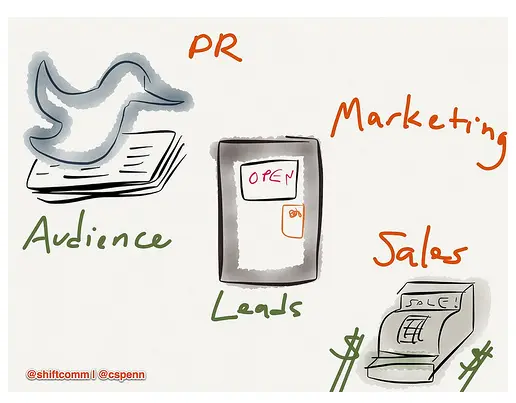
PR, Marketing and sales, all, differently, move people through the funnel from the brand unaware to the most aware (see this Eugene Schwartz 5 stages of the customer journey).
Content marketing is further divided into media buckets – Paid, Owned, and Earned.
The content made is the glue to adhere PR, Marketing, and Sales into one harmonious trust-building and relationship-forming machine.
Because the purpose of business is to create a customer, the business enterprise has two – and only two – basic functions: marketing and innovation. Marketing and innovation produce results; all the rest are costs. Marketing is the distinguishing, unique function of the business.
Peter Drucker

Role of Content Marketing and the ZMOT
Content marketing is becoming fundamental to business success at every level
JAY BEAR
Fundamental at every level because the journey people follow from unaware to most aware states happens in moments:

The above is a quote from the Google ZMOT, zero moment of truth. Showing that the buyers’ purchase path is determined by the first interaction a person has with your company.
For example:

The ZMOT begins with a person getting stimuli; an idea, seeing an ad, hearing a word, or watching a movie or TV show.
People Google, look and dig deeper to learn about a subject. If your ‘content’ satisfies their curiosity and answers their questions you may then influence and may control the narrative and become their ZMOT.
Absent any ‘content’ you are 100% out of the loop and have zero chance to influence the purchase decisions.
Naturally, and worse, for you, people will get answers, often from your competitors.
Influencing and controlling the narrative, and therefore the ‘ZMOT’ is the top-level goal of the content.
Four Definitions of the Content Marketing
1) The Formal Content Marketing Definition:
Content marketing is the process of creating and distributing relevant and valuable content to attract, acquire, and engage a clearly defined and understood target audience – with the aim of driving profitable customer action.
2) The Less Formal Content Marketing Definition:
Content Marketing is owning, as opposed to renting media. It’s a marketing process to attract and retain customers by consistently creating and curating content to change or enhance a consumer behaviour.
3) The ‘Twitter’ Content Marketing definition:
“Traditional Marketing tells the world. Content Marketing Shows the world you’re a rock star.”
4) The Content Marketing Definition for the (Executive) C-Suite:
Your customers don’t care about you, your products or your services…they care about themselves, their problems and needs. Content marketing is about creating interesting information your customers are passionate about so they actually pay attention to you.
Not enough definitions: here are 21 more definitions of content marketing for your enjoyment.
Three Examples of Content Marketing
Content marketing is not new. Oh no. The practice is over 100 years old! Although it was not called content marketing.
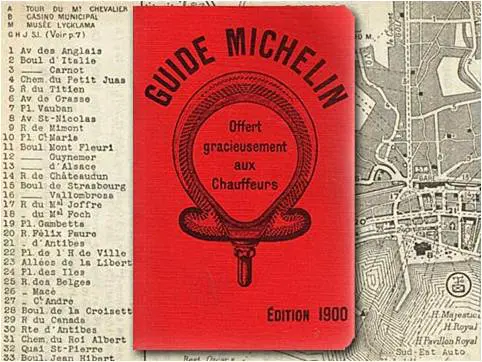
The earliest and best examples are the Michelin Guide, The Furrow Magazine, and the Jell-O receipt book.
Jell-O salespeople walked door to door giving away a desert receipt book showing how to use Jell-O to make delicious desserts. Jell-O grew sales in two years to over $1 million – 1906 dollars!
Ándre and Édouard Michelin started the Michelin Guide in 1906 as a hotel and restaurant rating guide for France.

The Michelin Tyre company stated goal of the Guide Michelin was to give people a reason to drive. When people drove more, they used their tyres. Old tyres are replaced with new tyres and Michelin would make more money.
Simple and deadly effective?
They gave out guides to hotels, mechanics, and gasoline vendors throughout France. At the time, there were only 2200 cars in France.
The Furrow magazine from the Deere and Mansure Co. later to become John Deer. The magazine had a circulation of 2 million – in 1912! The magazine featured advertising, reprinted articles and agricultural tips for the farming community – which in 1912 was massive.

What is the common thread which weaves its way through all these three stories?
I see this as an indirect marketing tactic to get sales. The Michelin brothers risked people would buy other tyres. All three companies gave value with the belief, that in the future, someone would buy their products.
The Content Marketing FAQ
Traditional marketing tells the world you’re a rock star. Content Marketing is showing the world you are one.
ROBERT ROSE
Who consumes all this Content? Simply, your ideal and target audience, potential customers, stakeholders, and competitors.

The premise underlining content marketing is to answer all the questions your prospects are asking – before they ask!
1) Which Industries should use Content Marketing?
Any industry where the sales cycle is longer than 2 minutes and people have questions. Even Tayto, Redbull, and Diet Coke market with content…
The traditional marketing tactics (advertisements, cold calling, direct mail, trade shows) are expensive; not as effective as previously, and worse people are immune to the interruption caused by ads. Worse, people do not trust advertisements.
Earning trust is an integral step in the relationship-building process.
Traditional advertisements do not build trust or relationships.
We use search engines, Google/Bing/Yahoo, to research answers to our problems.
Because of this shift from contacting a salesperson (the gatekeeper of information) to learning about a product. People now research themselves.
Therefore, a jumbo opportunity exists to get your articles and videos in the correct places so people can find, consume, and trust you and build relationships.
The Key is to position your answer with the angle of ‘I’m helping you (and not selling). This position will accelerate and foster the all-important know, like and trust you people must have before they buy.
Why do people need lots of information to make decisions? Because there is more information available. The chart is from Google ZMOT, zero moment of truth.
2) How does Content Marketing Work?
The goal of content marketing is to build familiarity, likability, and trust – Rand Fishkin
Think in terms of the macroeconomics of supply and demand.
People have problems in their life and business.
A baby not sleeping, a flat tyre, and no sales from social, or self-limiting beliefs, are questions on the demand side. Your answers are on the supply side of the equation.
The ‘content marketing manifesto’ states we must give the correct content, that answer the correct questions, in the correct channels, at the correct time, and in the correct formats, which answers the questions our prospects are asking.
That is a big ask of any business.
Rand Fishkins’s ‘content marketing manifesto’ says (and is a pledge):
“I (insert name) pledge to create something remarkable. Something people will love. Something people will share. Something I can be proud of. And if it fails to achieve my marketing goals. I won’t give up. I will try again. My failures will be the practice I need. To earn future success. And future customers.
So instead of forcing messages AT your people, content marketing builds relationships with people. Relationship building creates a deeper and more loyal connection which lasts into the post-sales, loyalty, up-selling, and evangelist stage of your relationship.
3) How Much Content Do You Need?
Make these your first 5 content pieces.
Take, for example, one ideal client avatar, or Marketing Persona. Limit to 1 product, 4 steps in the funnel and 3-5 questions per stage. That is 12 – 20 pieces of content per product.
The number of questions people ask depends directly on the complexity level. A $10 million SAAS product requires more answers than a 100-euro piece of software.
Think about every question that your customer has ever asked.
Right?
Every email you sent explains how your product works, what it costs, its benefits, its value, and every sale and marketing-related question you’ve answered.
Turn each question into a piece of content.
So, my earlier number of 45 or 75 pieces of content per product, per ideal client is not a magic number.
The ‘correct amount of content you need to create is that amount that satisfies your business goals. 
4) Why Invest in Content Marketing?
To make more and save more money!
One of the base levels of content marketing is building relationships with people. Relationships to enlist responses to get business results.
Content marketing provides compelling, and purposeful knowledge audiences are seeking. Content compared to advertisements allows a more personal approach to business and helps build trust.
5) What is so Great about Content Marketing?
Content has multiple benefits:
- You own it and content is an annuity that can’t be replicated elsewhere.
- Content increases brand trust and credibility.
- One piece of content can generate leads for your business for years.
- The cost of acquiring leads with content is lower compared to traditional outbound methods.
- Content builds thought leadership.
- Content attracts links from other websites (which improves the ranking of those pages).
- Each piece of content is a new entry point into your website, another front door.
- Each piece of content is another conversation opportunity with people.
- Content builds relationships and fosters trust with prospects.
- Content marketing works across the entire funnel, from awareness to evangelism.
- Content Marketing is a competitive advantage.
- Build links and domain authority.
- Convert the right customer.
6) What is the difference between Content Marketing, Inbound Marketing and Content Strategy?
There is an overlap between the three disciplines and each has its mandate in the Marketing process.
Content Strategy is the first step and focuses on the planning, creation, delivery, and governance of content.
Content Marketing is the process of creating content for your organization based on the content strategy. Including inbound marketing; the conversion into a sale process; customer service, customer retention, and the upsell process.
Inbound Marketing is the process of attracting and nurturing prospects. And nurturing with content. Earn the attention of people by having content that answers the right questions, at the right correct time and in the correct formats when people are searching. Inbound marketing begins with PR/brand awareness, helps to capture those leads with a compelling offer, and nurtures those leads to the point of the sale.
7) What is an Editorial Calendar?
It’s a calendar detailing the order and date/time of publishing content and the calendar delineates the who, where, and the type of content to publish.

The most effective and complete calendars map content to buyer personas, engagement cycle, (content based on phase in the buying process), and marketing channels.
8) What Are the Goals of Content Marketing?
The goals of content marketing relate to your business goals. Aligning content goals with your overall business aims/goals is required.
The hierarchy and order of goals:
Business Objectives > Marketing Goals / Objectives > Marketing Strategy > Content Goals / Objectives > Content Strategy > Content Tactics (Content Marketing) > Content Metrics.
Content can meet multiple goals. Here are a few examples:
- Branding
- Lead generation
- Lead conversion and nurturing
- Customer service & customer loyalty
- Upselling
- Education, email sign-ups, social shares,
- Replace salespeople,
9) What is an Ideal Client and Marketing Persona?
An ideal client or marketing persona is proxies for real customers. You must narrow your marketing efforts and focus on a limited target market.
Your ideal customer is a fictitious person to which your product is perfectly suited. A marketing persona is then created based on this ideal client.
A persona represents a subset of your target market. You give them a name, a profile, demographic info, job title, pain points, aspirations and the channels they use and most importantly, especially for Facebook Adverts, are psychographic details.
With these in hand, you focus all your content creation efforts with this persona/ideal client in mind.
10) Key Performance Indicators: How Do I Measure the Success of Content Marketing?
Use Key Performance Indicators.
KPI, (Key performance indicator) is the number attached to an activity and you check current results against actual as a measure of the goals that will be reached in the time frame indicated.
Content metrics measure the success or failure of your content marketing efforts compared to your overall business goals — not the goals of your content.
The goal of content marketing is to move the revenue and profit needle.
Examples of content marketing KPIs are conversions into sales, email sign-ups, social shares, and time on your website site.
Reach
- Unique visits
- Geography
- Mobile readership
Engagement
- Bounce rate/time spent
- Page views
- Click patterns
Sentiment
- Comments
- Social shares
Leads/Sales
11) How does Content Marketing fit into the Marketing Mix?
Content Marketing is one important element of your marketing strategy.
The marketing mix is that receipt mixed with the right ingredients, at the right time, served hot, which will get the attention of our ideal customer, attract them with compelling content, and convert a prospect from a state of low purchase intent to a purchase decision.
Each stage in the buying cycle has a sweat spot mix of channels and content types.
12) What is so Broken with Advertisements that we need Content Marketing?
Nothing.
Paid media is entrenched in the corporate culture and is part of the marketing mix. With billions to spend, you can put a message in front of massive audiences.
Several things are broken with ads.
Traditional ads are not as effective as they once were. Eyeballs have shifted from TV to online to TikTok, Snapchat, Instagram, Musically and other apps.
Advertisement is a one-way conversation, with brand recall and sales as the measure of ‘success.
13) If Traditional Advertising Pushes Messages on People, what does Content Marketing Rely Upon?
Content marketing relies on discovery on social media and search. SEO allows people to find answers in search.
14) Is there a Difference in the CPL (cost per lead) beween Outbound and Inbound Marketing?
Yes. The average cost per lead with outbound marketing was $346. For inbound leads using content marketing, the average is $135. (source: HubSpot The 2012 State of Inbound Marketing)
15) How long does one piece of content last?
Facebook Ads have a half-life of zero (0). Stop paying and views and sales dry up.
Evergreen content has a shelf life of years and will live indefinitely on your blog or until you remove it.
16) Is there a Competitive Advantage with Content Marketing?
Content enables know you, like you and trust you factors.
Having the right content in place helps build affinity and top-of-mind recall. Content enables your company to build intimate relationships with customers before your competitors even have a chance to contact them.
17) What areas of a Business does Content Touch?
The short answer is all customer-facing areas. Content feeds all your channels: search, social, email, PR, PPC etc.
- Social Media Marketing — content comes before social. Content is the fire, social is the gasoline. You need content to start the conversation and build a relationship.
- PPC — The foundation of every successful pay-per-click campaign is effective content.
- PR— All successful PR address the issues the readers care about, not what the business cares about. Content speaks to and answers those issues/pain points.
- SEO —Search engines reward businesses that publish relevant, high-quality, in-context content, see Google’s recent Hummingbird algorithm update.
- Inbound Marketing — Content is what attracts people/prospects to your business.
- Loyalty/ Advocacy
18) If I answer all the questions people will solve their problems without me!
This is a real concern for people beginning their content marketing journey.
Remembers, some people in your audience and tribe will choose to DIY a solution. No matter what actions you take or do not take, most will not. Ignore the DIY crowd as potential clients, however, they can be enticed to socially share your content.
Content Builds Relationships, Relationships Build Trust, and Trust Allows Sales
For example, the brake pads on a car or fixing a broken electric shower in a house. There are hundreds of YouTube videos showing step-by-step how to fix brake pads and how to fix electric showers. But, because I watched a few videos does that mean I can perform those tasks as easily, professionally, and successfully as the expert does? Nope.
I love cooking find food. Savoury and sweet main courses, desserts and bread and serving all to family and friends. My wife and I own about 50 cookbooks, including books from 2 and 3-star Micheline chefs. These books contain the exact receipts the chefs used to earn those Micheline stars. If I follow the receipts, does that imply I will get a Micheline star for my kitchen? No!
The same analogy applies to ‘giving away’ all your business secrets in the form of content. I have the receipt, but not have the expertise and experience to make a fine-dining dish.
Your content, your receipt, demonstrates your knowledge of the subject which builds credibility and trust.
Ready to build trust?
Let me know your experiences in the comments below.

hi Urban, dude you need to disable the forcefeed cookies for your sight, thats pretty lame…i wanted to read your content thanks but no thanks. also look at your website collection below. why are you forcing https:// thats whack
so to view your site
accept cookies
to comment
i need to add https://
to post i need to accept the data collection
man why are you so greedy with my browser history. thats even more whack.
lol, so funny my friend…
Cookies make the world go round and round…
the rest does not rate my commenting…really. The (https) makes us all safe…